
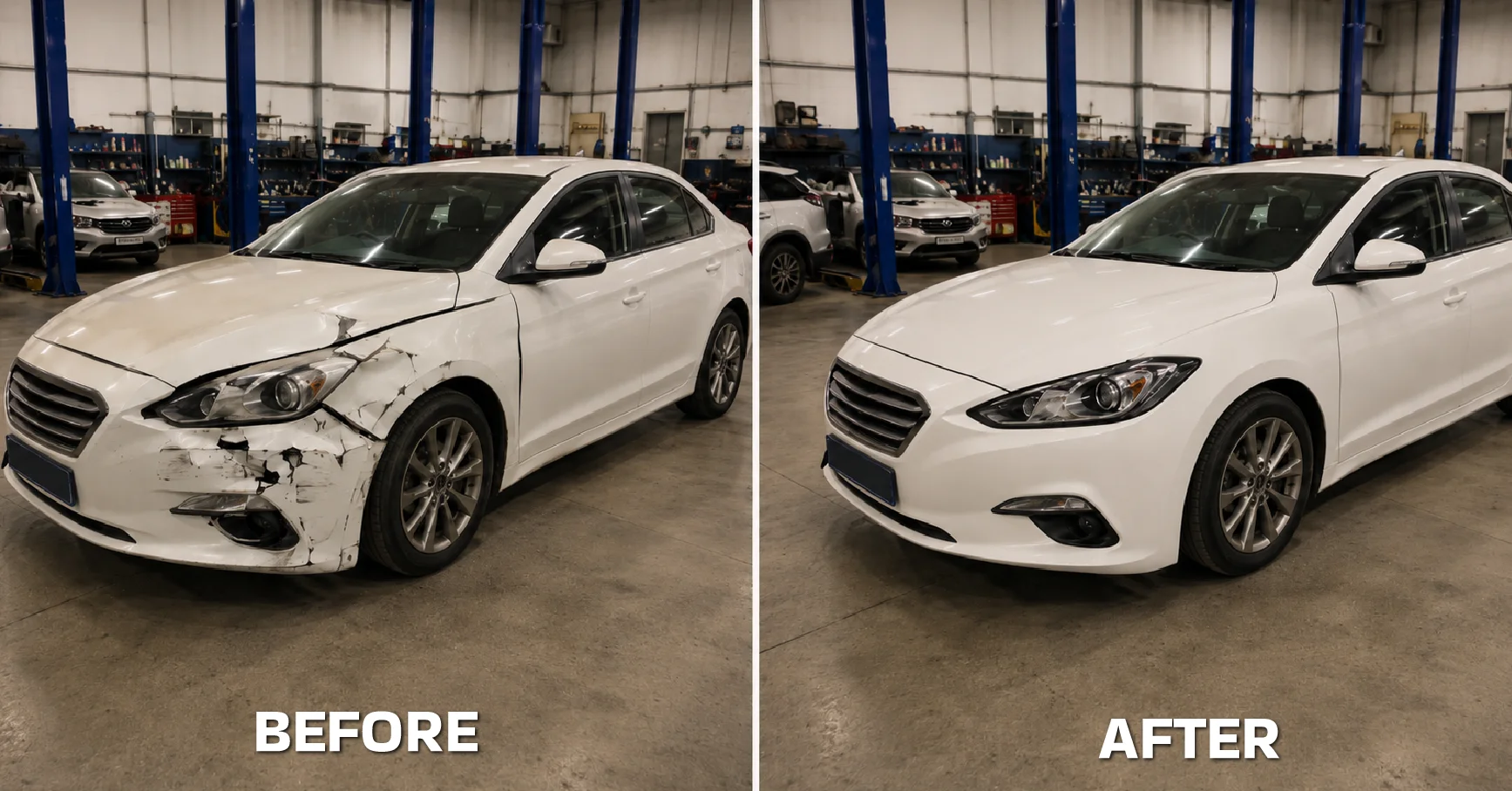
What Causes Car Dents? Common Types & Shapes Explained
June, 18 2026Out of sight, out of mind — that's how car owners in Perth, Western Australia, treat small dents on their vehicles until they're not small anymore. Car dents are the most common form of cosmetic damage, which may result from minor parking accidents, shopping cart impacts, hailstorms, falling objects, or accident bumps in everyday driving.
Whether it's multi-point hail dents or a big round dent, every dent tells a different story of how it happened, and that story matters most when it comes to choosing the right car dent removal method. That's why understanding what causes car dents and their common types can help you make smarter decisions in dent repair, protect your vehicle, and train you to act quickly in minor vehicle damage conditions. Keep exploring to understand everything clearly about car dents.
Understanding Car Dents: The Basics
A car dent occurs when an external force pushes against a vehicle's body panel with enough pressure to deform the metal or composite material beneath the paint, without causing damage to the surface. Unlike a scratch or scuff, which only damages the car's surface, dents change the actual shape of the metal. Depending on the external force, the unwanted dents may be round, hollow, shallow, deep creases, or barely visible while still affecting the panel's structural integrity.
Why Car Dents Occur on Modern Vehicles
Modern vehicles are built with a mixture of aluminium and high-strength composites; each material behaves differently when impacted.
- Aluminium Panels: These are lighter and more prone to creasing.
- Steel Panels: These tend to absorb impact differently and may be more resistant to minor dings but harder to reshape when dented.
This is the reason you require a detailed assessment for professional dent repair — what looks simple on the surface can sometimes involve underlying complex issues.
A Closer Look at Common Types of Car Dents
| Dent Type | Appearance | Common Causes | Typical Location | Severity | Recommended Repair |
|---|---|---|---|---|---|
| Hail Dents | Multiple small, shallow dimples spread across one or more panels, with paint usually intact | Hailstorms, ice impact | Roof, bonnet, boot lid | Minor to Moderate | Paintless Dent Repair (PDR) |
| Door Dings | Small, round, shallow dents | Shopping trolleys, adjacent car doors in tight car parks | Lower doors, fenders | Minor | Paintless Dent Removal (PDR) |
| Bodyline Dents | Dent that distorts the vehicle's design crease or character line | Impact along a body line, parking bollards, low-speed knocks | Side panels, along design lines | Moderate | Specialist PDR or panel beating |
| Large/Round Dents | Broad, shallow indentation, sometimes with slightly stretched metal | Falling branches, balls, low-speed reversing impact | Bonnet, roof, boot | Moderate | PDR or conventional repair, depending on depth |
| Sharp/Pointed Dents | Small but deep indentation, often with chipped or cracked paint | Stone impact, sharp object collision | Bonnet, bumper, fenders | Moderate to Severe | Filler and repaint; PDR not always viable |
| Multiple Dents | Several dents grouped closely together | Multi-vehicle parking incidents, storm debris | Side panels, roof | Varies | PDR, often requiring multiple passes |
| Edge/Boundary Dents | Dent sitting near a panel's edge or seam | Reversing into poles, tight garage entries | Near wheel arches, panel edges | Moderate | Often needs traditional repair (limited tool access for PDR) |
| Aluminium Panel Dents | Stiffer dent, more prone to cracking due to metal properties | Impact on aluminium bonnets/doors (common in newer vehicles) | Bonnets, doors on aluminium-bodied cars | Moderate to Severe | Specialist aluminium repair, sometimes panel replacement |
| Dents with Paint Damage | Dent accompanied by scratched paint | Sharp impacts, road debris, vandalism | Anywhere on the vehicle | Severe | Repaint required alongside dent repair |
| Crease Dents | Sharp, linear dent with a defined fold in the metal | Collisions, scraping against poles, bollards, or walls | Doors, quarter panels, bumpers | Moderate to Severe | Traditional panel beating (PDR is rarely effective on sharp creases) |
What Causes Car Dents? The Most Common Culprits
Weather Events
Perth and the wider South West region of Australia are more prone to sudden weather changes, causing severe car dents. A single storm can leave multiple dents across bonnets and roofs. Strong winds can also cause auto body damage by dislodging tree branches, garden furniture, or loose debris.
Car Park Incidents
Shopping centres and CBD car parks are the main spots for car dents. Tight parking bays, reversing trolleys, and other drivers opening doors without checking their surroundings all contribute to door dings. Many Perth motorists report this as the main culprit for minor or major car dents. Even careful drivers end up with severe dents on their cars in these confined spaces.
Shopping Trolleys and Pedestrian Mishaps
It's a familiar scenario: an unattended trolley rolls across a sloped car park and collides with a parked vehicle. Door dings from shopping trolleys are among the most common repairs panel shops see, particularly around busy retail precincts.
Minor Road Collisions
Low-speed bumps — reversing into a pole, misjudging a driveway, or a gentle nose-to-tail in slow traffic — are a major source of creases or structural dents. If these plastic bumper dents are left unchecked, they can become more extensive with time, particularly around bumper mounts, wheel arches, and panel seams.
Flying Debris & Road Conditions
Gravel roads, construction zones, and loose road surfaces common in Perth, Western Australia, can kick up stones and debris at speed, leading to small dents or chips, particularly on bonnets or lower panels. Following large trucks or driving through active roadworks increases the risk.
Wildlife Encounters
Western Australia's semi-rural and regional roads bring a unique hazard: wildlife. Kangaroos, in particular, are a leading cause of vehicle damage. Collisions with animals can range from minor bumper dents to significant front-end and structural damage, depending on the size of the animal and the speed of impact.
Falling Objects
Tree branches, loose roofing materials, and items falling from balconies or building sites are also causes of car dents, particularly for vehicles parked on the street or beneath trees. Even small objects can cause noticeable dents.
Why Even Small Dents Are Worth Addressing
It's not right to leave minor dents alone, especially if the paint is still intact, whether it's roof dents or door dents. If the dent caused any flexing or micro-cracking in the paint layer, it can still be a reason for rust or corrosion. Dents can also affect resale value; vehicle buyers can use this as a point of negotiation.
For larger dents, especially those resulting from road collisions, there's also the risk of hidden damage. A dent that looks straightforward on the surface might be masking misaligned panels, damaged sensors, or compromised structural panels.
Signs That Confirm Your Damage Qualifies as a Dent
- The metal is visibly pushed inward or outward, rather than just marked on the surface.
- The damage forms a smooth, rounded depression rather than a sharp scrape or line.
- The paint stays intact without cracking, peeling, or chipping.
- The mark doesn't disappear when cleaned, ruling out dirt, grime, or shadow.
- The shape lines up with a single impact point rather than general wear or fading.
- Running your hand over the area reveals a noticeable dent, even if it's hard to spot visually.
- Light reflecting across the panel reveals a distortion or ripple, where the metal is damaged.
How Dents Are Typically Repaired
The right fix depends on the depth, type, and location of the dent — not every dent gets repaired with the same method. Here's how professionals typically do this:
- Paintless Dent Repair (PDR): A specialist accesses the back of the panel and gently massages the metal back into shape, leaving the original paint untouched. Best suited for hail dents, door dings, and any dent where the paint hasn't cracked.
- Traditional Panel Beating: Used for sharper creases, deeper dents, or damage near panel edges, where PDR tools can't reach. The panel is reshaped manually, sometimes with heat, before being prepped for paint.
- Filler and Repaint: When the metal has stretched, or the paint has cracked, body fillers smooth the surface before it's blended and repainted to match the original finish.
- Panel Replacement: For severe structural damage or dents on aluminium panels that can't be safely reshaped, the panel may need to be replaced immediately.
Professional Dent Repair vs DIY Solutions
| Factor | Professional Dent Repair | DIY Solutions |
|---|---|---|
| Cost | Higher upfront cost, but often more economical long-term if done right the first time | Lower upfront cost using kits or household items |
| Time Required | Typically 1–3 hours for PDR; longer for panel beating or repaints | Can take longer overall due to trial and error |
| Tools/Equipment | Specialised PDR rods, glue-pulling kits, heat guns, and professional-grade tools | Basic kits, hairdryers, plungers, boiling water, dry ice |
| Skill Level Required | Trained technicians experienced in reading metal behaviour and panel structure | Variable, and often relies on guesswork without proper technique |
| Best Suited For | All dent types, including hail damage, creases, bodyline dents, and aluminium panels | Minor, shallow dents on accessible, flat panels |
| Risk of Further Damage | Low, due to controlled technique and experience | Higher — incorrect pressure or heat can crack paint or stretch metal further |
| Finish Quality | Seamless, factory-like finish with no visible trace | Often inconsistent, with subtle shadows or unevenness left behind |
| Warranty/Guarantee | Usually backed by a workmanship guarantee | No guarantee — mistakes can't be claimed back or corrected easily |
| Insurance Compatibility | Generally accepted for claims with proper documentation | Rarely accepted, and DIY attempts can sometimes complicate or void a claim |
Frequently Asked Questions
What typically causes car dents?
Door dings from shopping trolleys and adjacent vehicles in tight car parks are among the most common causes, alongside hail damage and minor parking mishaps.
Can a car dent be fixed without repainting?
Yes, if the paint has not cracked or chipped, it can be easily repaired with the paintless dent repair method.
Is DIY repair safe for my car?
DIY methods work best for shallow, smooth dents where the paint is still intact. But DIY repairs, if not performed correctly, can turn a simple repair into an expensive one.
Does car insurance cover dent repair?
Yes, comprehensive policies cover dent repair, particularly for hail damage or third-party incidents, but coverage depends on your specific policy. It's worth checking with your insurer before booking any repair service.
How long does professional dent repair take?
Paintless dent repair takes one to three hours per panel, while traditional dent repair can take a day or more.
What makes a car dent eligible for paintless dent repair?
PDR works best for shallow, smooth dents, where the paint is still intact and the panel is accessible from behind. It's well suited for hail dents or door dings, while sharp creases or cracked paint usually rule it out.
The Bottom Line!
Car dents come in different forms, from hail dents to bumper dents and other large auto body dents, requiring effective dent repair methods. It's worth having your dents assessed by a professional repair team rather than relying on DIY solutions. A qualified technician can quickly identify the dent damage and repair it using a cost-effective, high-quality repair method.
Keep your vehicle well-maintained by getting it repaired promptly from a professional repair centre.
Pro Tip: A little repair today can save a lot tomorrow.