Found a dent on your car and wondering what it'll cost to fix? A shopping trolley ding and a door crease can be hundreds of dollars apart, even on the same panel of the same car. In Perth, a small ding usually costs $80 to $250 with paintless dent repair, a large dent $300 to $900, and a crease $250 to $800.
Size is the best starting point, but it isn't the only thing that decides the price. Depth, location and panel material all matter too. This guide breaks down the cost of the three dent types most drivers deal with: small dings, large dents and creases.
Quick Overview: Dent Repair Cost by Size at a Glance
| Factor | Small Ding | Large Dent | Crease |
|---|---|---|---|
| Size | 20-cent coin to golf ball | Tennis ball to dinner plate+ | Sharp, linear fold (length varies) |
| PDR Cost | $80 to $250 per dent | $300 to $900 | $250 to $800 |
| Conventional Repair Cost | Rarely needed | $500 to $1,500+ | $600 to $1,800+ |
| Typical Time (PDR) | Under 1 hour | 2 to 4 hours | Half a day to a full day |
| Typical Time (Conventional) | Not usually needed | 1 to 4 days | 1 to 4 days |
| Biggest Cost Driver | Location and number of dings | Panel size and paint match | Metal stretch and body lines |
Indicative AUD ranges only. Final quotes depend on the panel, paint condition, access and the repairer.
Small Dings: The Cheapest Dent to Fix
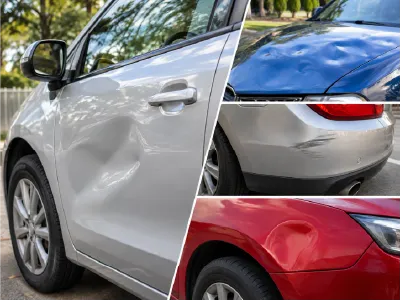
A small ding is roughly the size of a 20-cent coin up to a golf ball. Most come from car park door knocks, shopping trolleys, hail pockmarks and stray stones.
Typical cost: $80 to $250 per dent
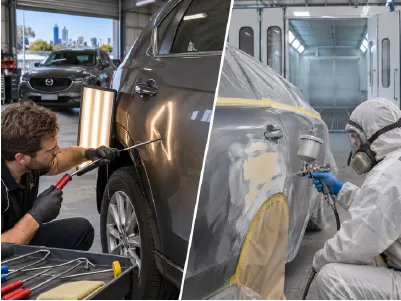
Most small dents in Perth are fixed with paintless dent repair (PDR). The technician either pushes the metal back into shape from behind with specialised rods, or, where the back of the panel can't be reached, glues a tab to the dent and gently pulls it out. Tap-downs then level any high spots. There's no sanding, filler or repainting, so the job is quick and your original factory paint stays intact.
What keeps small dings at the low end
- The paint is undamaged
- The dent is shallow
- The panel is easy to reach
- The metal hasn't stretched
- The repair takes under an hour
What pushes a small ding towards $250 or more
- The dent is on a panel edge or body line
- The panel is aluminium
- There's a cluster of dings close together
- Access is difficult, such as behind a door frame
Many Perth dent removal shops price small dings per dent, sometimes with a discount for each extra dent on the same panel. If you've got five or six dings after a hailstorm, ask for a per-panel or per-vehicle price instead.
Is it worth fixing? Almost always. Small dings are cheap to repair, and leaving them can cut your resale value or trade-in offer by more than the repair would have cost.
Large Dents: Where Prices Start to Climb
A large dent is anything from tennis ball size up to a dinner plate or bigger. These usually come from a sideswipe in a car park, a fallen branch, or someone leaning heavily on the bonnet.
Typical cost: $300 to $900 with PDR, or $500 to $1,500+ with conventional repair
Size alone doesn't decide the repair method. A shallow large dent with intact paint can often still be fixed with PDR. It just takes longer, because the technician has to work in small steps to avoid stretching the metal.
When conventional repair is usually needed
- The paint is cracked or broken
- The dent is deep, with sharp or stretched metal
- The damage runs into a panel edge that can't be reached from behind
- The panel has previous filler work
Conventional repair, done by panel beaters, involves pulling the dent, applying filler where needed, then sanding, priming, painting and blending the colour into the surrounding panel. That means more labour, more materials, more time in the spray booth and a higher price.
Cost factors specific to large dents
- Panel size: A large dent on a bonnet or roof means more surface to prepare and paint.
- Colour: Metallic, pearl and tri-coat paints take extra steps to match, so they cost more than solid colours.
- Blending: Good repairers blend paint into the surrounding panels so the repair can't be seen, which adds to the cost.
- Time off the road: Conventional repairs usually mean two to four days in the workshop, while PDR on a large dent is often done the same day.
Is it worth fixing? Yes, but get two or three quotes from different Perth repairers to make sure the price and method are right.
Creases: The Most Demanding Dent to Repair
A crease is a dent with a sharp, linear fold in the metal. It's commonly caused by clipping a pole while reversing, swinging a door into a wall, or a minor collision. Even a slight crease can be hard to fix, because the impact stretches the metal.
Typical cost: $250 to $800 with PDR, or $600 to $1,800+ with conventional repair
Creases cost more than a round dent of similar length. When metal folds sharply, it stretches along the fold line, and stretched metal doesn't return to its original shape easily. The technician has to release the tension bit by bit along the crease. If the metal is too stretched for PDR, filler and conventional repair may be needed.
A crease on a flat part of the panel is easier to fix than one on a body line or panel edge, where the repairer has to reshape the metal by hand and get the line's sharpness and angle exactly right.
What affects the cost of crease repair
- Length: A 5 cm crease is a very different job from a 25 cm one.
- Depth: Deeper folds mean more stretched metal and more time.
- Location: Creases on body lines, door edges and wheel arches cost the most.
- Paint damage: Creases often crack the paint along the fold, which rules out PDR.
- Panel type: Creases in aluminium are the hardest and most expensive to fix.
Is it worth fixing? Yes. Creases catch the light and are very visible, so they hurt your car's appearance and value.
Side-by-Side Comparison: What You'll Typically Pay
- Small ding (up to golf ball size): $80 to $250 per dent, usually PDR, often done in under an hour.
- Large dent (tennis ball to dinner plate and above): $300 to $900 with PDR, or $500 to $1,500+ with conventional repair.
- Crease (sharp, linear fold): $250 to $800 with PDR, or $600 to $1,800+ with conventional repair.
These are indicative ranges only. The real price depends on the dent's size and depth, the repair method, the paint, the car and the repairer.
Paintless vs Conventional Repair: Why It Changes the Bill
Paintless dent repair keeps your original paint intact, takes less time and costs less. It also avoids any risk of colour mismatch. Its limit is that it only works when the paint has no cracks or chips.
Conventional repair handles the damage PDR can't, including cracked paint, deep dents and edge damage. It costs more because of the extra labour, materials and painting. If the paint itself has failed, a car respray may be needed.
A good dent repairer will tell you exactly which method suits your dent. If someone quotes conventional repair for a small, shallow dent, it's worth asking why. For a full breakdown, read our guide to PDR vs traditional dent repair costs.
Car Dent Repair in Perth: The Real Price Drivers
- Size and severity: Minor dents and small door dings are quicker to fix, while larger or sharper dents add complexity.
- Paint condition: Intact paint means PDR is possible. Cracked paint means repainting, which costs more.
- Dent type: Shallow, round dents are cheaper. Sharp or folded dents cost more.
- Location: Panel edges, body lines and double-skinned areas like door frames are harder to reach and take longer.
- Panel material: Aluminium panels, common on newer European and premium cars, don't hold their shape like steel, so expect to pay more.
- Paint type: Pearl, metallic and tri-coat paints cost more to match and blend.
- Sensors and cameras: Dents near parking sensors or cameras may need recalibration after repair.
- Number of dents: Hail dents are usually quoted per panel or as a package, not per dent.
- Vehicle type: Luxury and modern vehicles can cost more to repair.
These factors explain why two dents of a similar size can get very different quotes.
Will Insurance Cover Small Dings, Large Dents or Creases?
It depends on the repair cost compared with your excess. Comprehensive car insurance excesses are commonly $500 to $1,000 or more. A small door ding costing around $150 is almost always cheaper to pay for yourself.
A large dent or crease that costs more than your excess may be worth claiming, but weigh up the effect on your premium and no-claim bonus first.
Hail damage is the exception. Dozens of dents across the bonnet, roof, boot and doors can quickly add up, so a claim usually makes sense. Our tips to protect your car from hail damage can help you avoid it in the first place.
DIY vs Professional Dent Repair Cost by Size
| Dent Size | DIY Cost | Professional Cost | DIY Risk | Verdict |
|---|---|---|---|---|
| Small ding (20-cent coin to golf ball) | $20 to $100 (suction cup or glue-puller kit) | $80 to $250 per dent | Low to medium | DIY can work on shallow dings with intact paint on flat panels |
| Large dent (tennis ball to dinner plate+) | $50 to $150 (larger kit and tools) | $300 to $900 (PDR) or $500 to $1,500+ (conventional) | Medium to high | Get a professional quote first, since a botched attempt can stretch the metal |
| Crease (sharp, linear fold) | $50 to $150 (tools rarely do the job) | $250 to $800 (PDR) or $600 to $1,800+ (conventional) | High | Leave it to a professional |
Indicative AUD ranges only. A failed DIY attempt can turn a PDR job into a full panel repair or replacement, so DIY can end up costing more than the table shows.
Thinking of trying it yourself? Our comparison of glue dent pullers vs slide hammers explains which DIY tools suit which dents.
How We Quote for Car Dent Repair by Size in Perth
- Size first: Whether it's a small ding, large dent or crease helps decide the repair method.
- Paint check: Intact paint usually means PDR. Cracked or chipped paint means conventional repair.
- Location: We check whether the dent is on a flat panel, body line or edge. Edges and lines cost more.
- Panel material: Aluminium takes longer than steel.
- Depth and sharpness: Sharp creases mean more stretched metal and more labour.
- Clear written quote: You'll know the repair method, what's included and the price before any work starts.
Got multiple dents or hail damage? Send clear photos of the damage before visiting our workshop and ask for a bundle price.
Frequently Asked Questions
How long does car dent repair take?
With paintless dent repair, a small ding takes 30 minutes to 2 hours, a large dent 2 to 4 hours, and a crease half a day to a full day. Conventional repairs usually take 1 to 4 days.
Do hail dents cost the same as a single dent?
No. Many Perth dent removal shops price hail damage per panel or per vehicle, which works out cheaper than paying per dent.
Will a repaired dent show on a vehicle history report?
Generally, no. A private dent repair paid out of pocket isn't recorded. An insurance claim goes on your claims history with insurers, but minor repairs don't usually appear on vehicle history reports.
Can a dent be too big for PDR?
Yes. If the metal is badly stretched or the dent runs onto a panel edge, conventional repair is the better option.
Does dent repair cost more on a bonnet or roof than a door?
Often, yes. Bonnets and roofs are large, flat horizontal panels that show every imperfection, and roof dents may need the headlining lowered for access. Send photos of the damage for an accurate price.
Get an Honest Car Dent Repair Quote Today
Small door dings are cheap to fix, large dents sit in the middle, and creases cost the most to repair in Perth. What really drives the price is paint condition, because it decides whether your car needs PDR or conventional repair. Whatever the damage, getting it checked early is the cheapest option.
Not sure which repair your car needs? Send us a few photos on WhatsApp or drop your car at our Willetton workshop. We'll tell you the right method, what's included and the price in writing, with no surprises. Free pickup and delivery is available. Request your free quote today or call us on 1300 508 491.