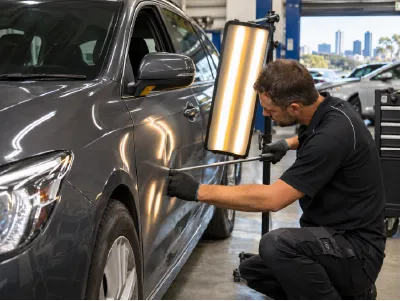
Car park mishaps, hailstorms and minor knocks cause dents every day. The good news is that many of them can be fixed without sanding, priming or repainting. Paintless dent repair (PDR) is a technique that removes dents by working the metal back into shape from behind the panel, using specialised tools, while the original factory paint stays intact. For suitable dents, it's the fastest and most affordable way to get your car back to its pre-damage condition.
This guide covers what PDR is, how it works step by step, which dents it can fix, which it can't, and how it compares with traditional repair.
Quick Notes on PDR
- Suits dents where the paint is still intact
- Keeps your original factory finish
- Works on car park dings, hail damage and minor door knocks
- Carried out by trained PDR technicians
- A popular alternative to traditional panel repairs
What Is Paintless Dent Repair (PDR)?
PDR has been around since the 1960s and is now standard practice across the industry, especially for hail damage, door dings and minor impact marks.
It's a specialist repair technique for dents where the paint hasn't cracked, chipped or peeled. Because the original finish isn't disturbed, there's no filler, no primer and no respray involved.
The work is done by trained PDR technicians in a workshop with proper lighting and tools. Perth's hail season keeps repairers busy, but most jobs come from ordinary, everyday parking knocks.
A faster turnaround and no repaint usually mean a lower bill than traditional panel beating.
What Are the Paintless Dent Repair Methods?
PDR technicians choose a method based on where the dent sits and how easy the panel is to access, always protecting the paint. The common methods are:
Rod and Tool Pushing
- The most common PDR method.
- Slim, specialised metal rods reach the back of the panel and carefully work the dent outward.
- Best for dents with clear rear access, such as guards, doors and bonnets.
- Small, controlled pushes gradually return the metal to its original shape.
Glue Pulling
- Used when the back of the panel can't be reached.
- A small tab is glued to the dent, then gently pulled out with a puller.
- The glue releases cleanly and leaves no marks.
- Suits roof rails, pillars and double-skinned panels.
Tip: air-powered dent pullers use compressed air to apply a controlled pulling force and lift dents from the panel.
Tap-Down Method
- Used to flatten raised edges around a dent.
- A blending tool taps down the high spots while the dent is pushed out from behind.
- Gives a smooth, level finish.
Hail Damage Repair
- Combines rod pushing and glue pulling to fix hail damage.
- Technicians work through dozens of small dents across bonnets, roofs and boots.
- Often quicker and cheaper than repainting in a spray booth.
How Paintless Dent Removal Works, Step by Step
Want to keep your factory paint and protect your car's value? That's exactly what PDR is designed to do. The process looks simple, but it takes years of practice to remove dents cleanly without damaging the paint. Most PDR repairs follow these steps:
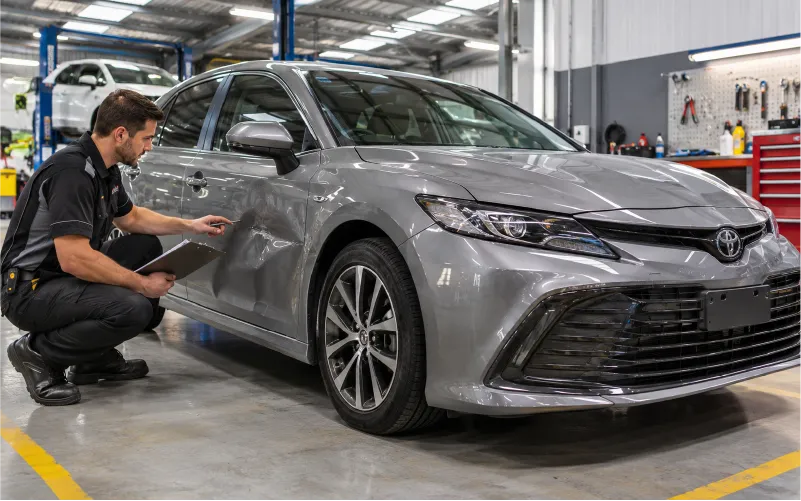
1. Assessing the Dent
The technician first checks the dent's size, depth and location, and whether the paint is intact. They also check the panel itself, because aluminium, high-strength steel and double-skinned panels are common on modern cars. This step decides whether PDR is suitable.
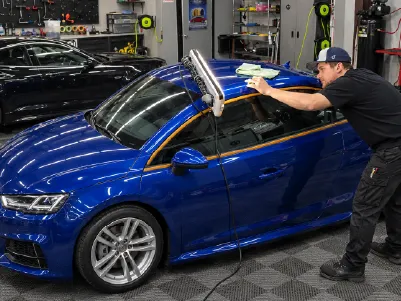
Good lighting matters. PDR technicians use reflection boards or LED lamps that show a dent as distorted lines, and those lines act as a map for the whole repair.
2. Getting Access Behind the Panel
To push the dent out, the technician needs to reach it from behind. Sometimes that means removing an interior door trim, a tail light, the roof lining or an inner guard liner. Other times, they can get in through an existing gap or access hole.
Because there's no sanding, masking or painting, this access step is usually the only disassembly needed, which is why PDR is so much faster.
3. Massaging the Metal Back Into Shape
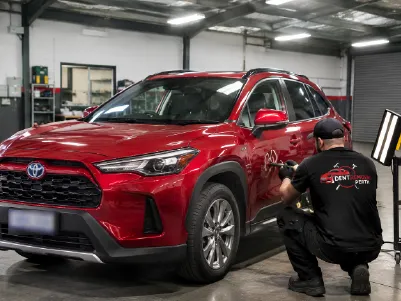
This is where skill matters most. The technician uses specialised rods and levers, each shaped for a different angle and panel. They place the tip against the underside of the dent and apply small pushes, working from the outer edge towards the centre.
The goal isn't to remove the dent in one go, because that can stretch the metal and leave a high spot. Instead, the technician releases the dent gradually with small, precise movements, checking the reflection the whole time.
4. Tapping Down High Spots
As the metal settles, small high spots can form on the surface. The technician taps them down from the outside using a knockdown tool. This fine detail work is what separates a seamless PDR finish from a repair you can still see in normal light.
5. Final Check
Once the dent is gone, the technician inspects the panel under the light from several angles. The finish should be smooth, with no scratches, distortion or ripples. There's no drying or polishing time, so the car is ready to go, and with our free pickup and delivery, it can be returned to your home or work anywhere in Perth.
What Types of Car Dents Can PDR Fix?
| Dent Type | Common Cause | PDR Suitability |
|---|---|---|
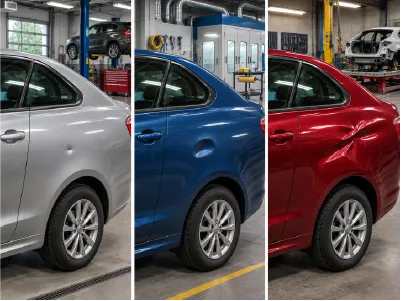
| Door dings | Neighbouring car doors, trolleys | Excellent |
| Hail dents | Hailstorms | Excellent, even for dozens of dents |
| Car park dents | Low-speed bumps, careless reversing | Excellent |
| Shallow round dents | Stray balls, falling branches, light knocks | Excellent |
| Shopping trolley dents | Runaway trolleys | Very good |
| Minor crease dents | Light scrapes against poles or other cars | Good, when the metal isn't stretched |
| Bonnet and roof dents | Hail, falling objects | Good, depending on panel access |
| Body line dents | Knocks along panel edges and curves | Moderate, needs an experienced technician |
| Bumper dents | Minor bumps, light collisions | Moderate, on flexible bumpers with no cracks |
| Edge dents | Door and guard edge impacts | Moderate, depends on how sharp the dent is |
Which Dents Aren't Suitable for PDR?
- Deep, sharp creases where the metal has stretched and weakened
- Dents with cracked, chipped or peeling paint
- Severe damage that needs collision repair
For the full list of limits and grey areas, read our guide to which dents PDR can and can't fix.
PDR vs Traditional Dent Repair
Here's how the two methods compare. For a deeper breakdown, see our guide to PDR vs traditional dent repair.
- Process: PDR removes the dent from behind. Traditional repair involves filling, sanding, priming and repainting the panel.
- Paint: PDR keeps your original factory paint. Traditional repair replaces it, and matching paint is difficult on older cars and on metallic or pearl finishes.
- Time: Many PDR jobs are done in a few hours, and larger hail jobs can take a few days. Traditional repair takes several days because the paint needs time to cure.
- Cost: PDR typically costs $100 to $450 for small to medium dents, while traditional panel beating and repainting usually runs $600 to $1,500+ per panel.
- Resale value: Keeping the original paint helps protect your car's resale value. Visible repairs or resprays can be picked up by buyers and pre-purchase inspectors.
- Environmental impact: No paint, solvents or fillers are used, so there's less waste and fewer fumes.
The Benefits of Paintless Dent Repair
- It's faster: You can often drop your car at Dent Removal Perth in the morning and collect it that afternoon.
- It costs less: With no painting, sanding or priming, there are fewer repair stages and a lower bill.
- It keeps the original paint: Factory paint is applied and cured under controlled conditions, making it more durable than most workshop resprays.
- It avoids colour-matching problems: There's no risk of one panel looking slightly different from the rest of the car.
- It's a cleaner repair: There's no filler that can shrink, crack or bubble years down the track.
How Long Does PDR Take?
It depends on the damage. A single door ding usually takes 30 to 60 minutes. A few dents on one panel can take a couple of hours. Heavy hail damage, with dozens or even hundreds of dents, can take several days.
Access also affects the timeline. If the technician needs to remove trims or lights to reach the dent, it adds a little more time.
DIY Dent Repair vs Professional PDR: Which Should You Choose?
A DIY dent repair kit can seem like an easy fix for a small car park dent, but the results are unpredictable and can cause extra damage that drives up the repair cost. With professional PDR, the right tools and trained hands do the work, so the paint stays intact and the dent comes out cleanly.
| Factor | DIY Kit | Professional PDR |
|---|---|---|
| Best for | Small, shallow, round dents on flat panels | Most dents with intact paint, including creases and larger marks |
| How it works | Pulls or suctions from the outside | Massages the metal from behind with specialised tools |
| Risk | Cracked paint, stretched metal, raised high spots | Low, in the hands of an experienced technician |
| Finish | Often leaves ripples or visible marks | Smooth and close to invisible |
| Time | An hour or two of repeated attempts | Often done the same day for minor dents |
Note: DIY is only worth trying on tiny, shallow dents on a flat panel. If the dent is near an edge, on a body line or close to chipped paint, call Dent Removal Perth on 1300 508 491 or send a few photos for a free quote, and we'll tell you straight whether PDR will work.
Frequently Asked Questions
Is PDR a permanent repair?
Yes. Once the metal has been reshaped, it stays that way. The repair won't fade, shrink or come back, which filler sometimes can.
Can PDR fix a dent on any car?
On most cars, yes, but not on every panel. Aluminium and high-strength steel need more care, and some designs make access harder. A PDR technician can tell you once they've seen the car.
Can anyone spot a PDR repair on my car?
A well-done PDR repair is usually invisible. Even in bright light, the panel should look smooth and undamaged.
Does insurance cover paintless dent repair?
Comprehensive car insurance generally covers dents on your own car, including hail damage and accidental dents, subject to your excess and policy conditions. Third party property damage cover doesn't cover dents on your own car; it only pays for damage you cause to other people's vehicles and property. Check your policy to confirm what's included.
Is Paintless Dent Repair Right for Your Car?
If your car has a shallow or round dent and the paint is still intact, PDR is likely the best option. It's quicker, cheaper and keeps your car's original finish untouched. If the paint is damaged or the metal is stretched, traditional panel beating will give the best result.
The easiest way to find out which repair your car needs is to ask. Call Dent Removal Perth on 1300 508 491 or send us three photos for a free quote, and we'll tell you straight whether PDR will work.